


Finding a dependable health equipment supplier isn’t just about comparing prices, you know? It’s more like a decision with serious implications—think about patients, the clinical team, budgets, and just keeping things running smoothly. For example, if an infusion pump gets delayed, it can throw an entire ward off track. Or if a device isn’t well documented, it creates unnecessary confusion and worry.
Did you know that, according to the World Health Organization’s Global Atlas of Medical Devices, there are over two million different types of medical devices around the globe? These are sorted into more than 7,000 categories, which makes choosing the right supplier pretty overwhelming. The FDA points out that medical devices range from simple examination tools to highly complex implantable systems. Each type needs its own set of evidence, training, maintenance, and quality checks.
So, don’t just be swayed by a shiny catalog. Look deeper.
Don Berwick, a well-known healthcare quality expert, once said, “Every system is perfectly designed to get the results it gets.” This really hits home when you’re looking at suppliers. If they can’t give you clear certifications, detailed batch records, warranty info, proper user training, and reliable tech support, then that supplier probably has some weaknesses. ECRI’s annual health tech reports keep pointing out risks related to equipment misuse, poor maintenance, and ineffective implementation. These aren’t just warning signs you brush off—they’re things you need to pay attention to.
Good suppliers usually have traceable manufacturing records, clear references from other hospitals, documented after-sales support, and realistic promises about delivery times. Don't just trust a slick sales pitch—ask for proof from hospitals similar to yours. Try out their communication first. If their follow-up or support seems off in the initial stages, don’t assume it’ll get better after you sign the contract.
Honestly, there’s no such thing as a perfect supplier.
Even seasoned buyers can miss out on important details like spare parts availability or software support. That’s why it’s a good idea to include clinicians, biomedical engineers, finance folks, and infection control teams in your reviews. Sometimes, the cheapest quote isn’t necessarily the best choice. The real winner is the supplier who’s there for you when equipment breaks down at 2 a.m., and stands by their products no matter what.
Getting the right equipment isn’t always easy, but taking the time to weigh these factors makes all the difference.

Define Your Health Equipment Needs and Supplier Criteria
Reliable supplier selection begins with a precise definition of your health equipment needs. Identify the users, clinical purpose, operating environment, quantity, and expected service life. A rural clinic may need dust-resistant monitors, simple controls, and stable battery support. A surgical department requires tighter accuracy, sterilization compatibility, and fast technical response.
The WHO Global Report on Assistive Technology estimates that 2.5 billion people need at least one assistive product. This number may exceed 3.5 billion by 2050. Your criteria should reflect this growing demand, not only today’s purchase. Request evidence of quality management, product testing, traceability, calibration, and relevant regulatory documentation. ISO 13485 certification can support confidence, but certification alone does not prove consistent performance. Ask for maintenance records and references from comparable healthcare settings.
Supplier evaluation should also include lead times, spare-part availability, training, warranty terms, and complaint handling. The WHO Global Patient Safety Action Plan 2021–2030 reports that one in ten patients experiences harm in healthcare. Equipment failures can contribute to that risk. Test samples under realistic conditions before signing a large contract. Check whether the supplier answers technical questions clearly. I have seen polished documents hide weak after-sales support. That remains an uncomfortable lesson. A low quotation may look efficient, yet delayed repairs can cost more than the equipment itself. Document every claim, verify it independently, and review performance after installation.
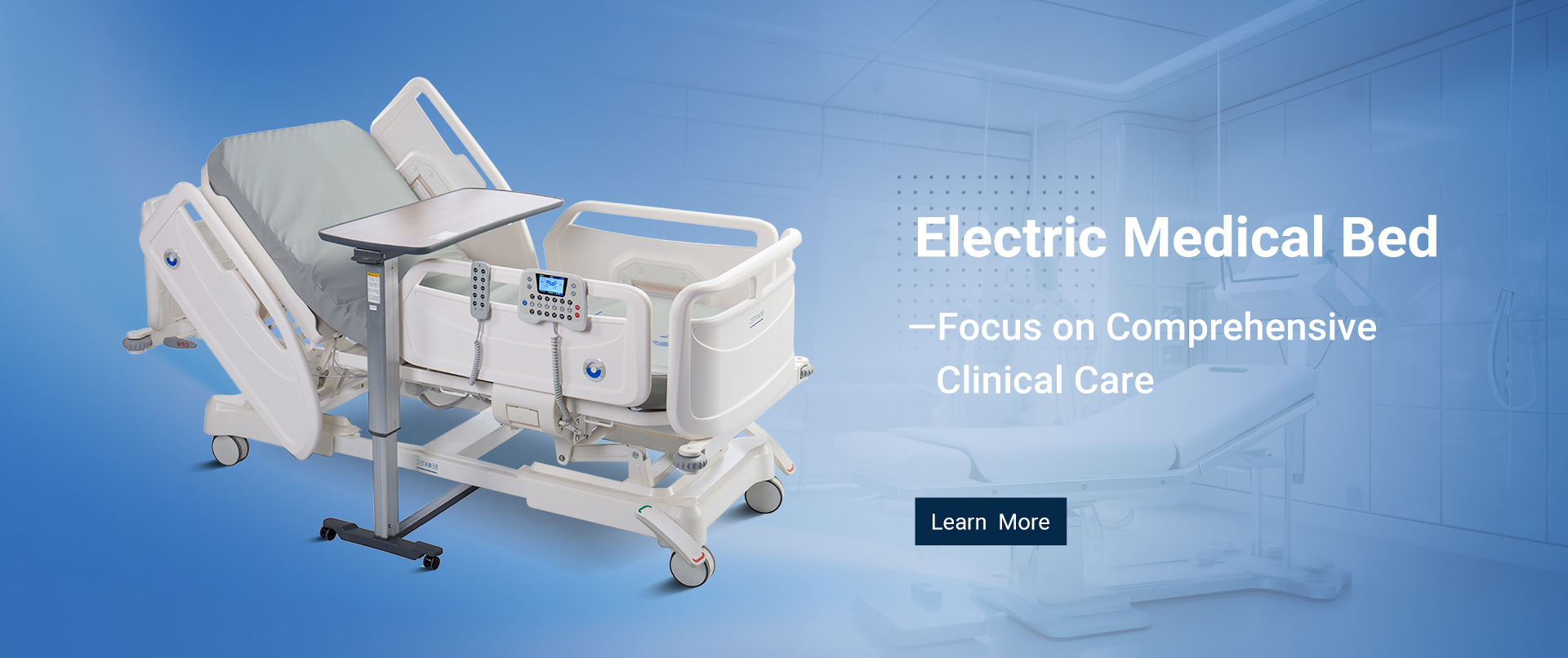
A5 Aceso Series Electric Medical Bed: Five-Function Support for Safer, More Comfortable Patient Care
Designed for high-end wards, this five-function electric medical bed supports safer, more comfortable patient care through precise positioning and smooth height adjustment. Backrest, leg-rest, bed-height, and tilt functions can help clinicians achieve practical care angles while reducing unnecessary manual handling. The low position may support safer transfers, while a raised working height can improve caregiver ergonomics during examinations and daily nursing tasks. By promoting stable posture and easier repositioning, the bed provides valuable support for patients with limited mobility and helps reduce avoidable risks associated with prolonged bed rest.
Its design also aligns with major patient-safety priorities. The World Health Organization reports that falls cause approximately 684,000 deaths worldwide each year, making mobility assistance and environmental safety essential in clinical settings. In addition, Agency for Healthcare Research and Quality guidance identifies pressure injuries as a significant hospital safety concern, emphasizing regular repositioning, skin assessment, and pressure redistribution. The bed’s adjustable platform can support these care protocols by enabling more effective positioning, easier access for assessments, and smoother transfers. With integrated safety features, durable construction, and responsive electric control, it offers a practical foundation for vital-sign support, nursing efficiency, and patient dignity in demanding healthcare environments.

FAQS
Identify users, clinical purpose, environment, quantity, and expected service life. A rural clinic may need dust resistance, simple controls, and dependable battery support. A surgical department may require high accuracy and sterilization compatibility.
Request quality records, product testing results, traceability details, calibration evidence, and regulatory documents. Ask for maintenance histories and references from similar healthcare facilities. Certification helps, but it does not guarantee consistent performance.
Test samples in realistic conditions before signing a major contract. Check alarms, controls, accuracy, cleaning procedures, and battery performance. A polished document can hide weak support. That lesson is uncomfortable.
Ask about production schedules, equipment numbers, work shifts, and recent deliveries. During a factory visit, inspect material flow, traceability labels, calibration areas, and final testing. Request actual quality records. Photographs are not enough.
Not necessarily. A smaller facility may offer closer engineering attention. A larger plant may have broader resources but divided responsibilities. Ask about similar systems produced and supported. I once overvalued factory size.
Confirm installation help, operator training, troubleshooting, software updates, and spare-part planning. Request written response times and escalation contacts. Ask a practical question about calibration or an unusual alarm. Test support early.
Request itemized offers covering equipment, accessories, installation, training, taxes, and consumables. Compare at least three offers with identical specifications. Check calibration, safety testing, maintenance, and missing components. The lowest price may mislead.
Confirm coverage periods, excluded parts, labor limits, repair locations, and failure procedures. Also verify dispatch dates, packaging standards, installation needs, and responsibility for shipping damage. Keep every document. Promises can change.
Ask about spare parts, technical support, preventive maintenance, software updates, and service records. Contact recent customers using similar equipment and verify their experiences independently. Measure how quickly and clearly the supplier responds. No checklist is perfect.
Conclusion
Finding a reliable Health Equipment supplier begins with clearly defining your equipment requirements, quality standards, budget, quantities, and delivery expectations. Once your needs are established, research potential suppliers through several trustworthy sources and evaluate their reputation, industry experience, product range, and communication practices. It is also essential to verify product quality, relevant certifications, safety documentation, and compliance with applicable regulations before making a purchasing decision.
A dependable supplier should have sufficient manufacturing capacity, technical expertise, quality control procedures, and responsive support services. Compare quotations carefully, considering not only price but also warranties, delivery schedules, payment terms, installation assistance, maintenance, and after-sales service. To reduce risk, request product samples, arrange facility audits when possible, and contact previous customers for references. By combining document reviews, practical testing, supplier assessments, and ongoing communication, buyers can select a trustworthy partner that delivers consistent equipment quality and dependable long-term support.
Related Posts
-
Understanding the Different Types of Hospital Medical Equipment
-

Top 10 Hospital Equipment Suppliers in China for Global Buyers?
-

How to Source Health Equipment Globally in 2026?
-

Top Medical Equipment Trends to Watch in 2026?
-

China Best Health Equipment for Global Buyers in 2026?
-

Top 10 Essential Tips for Choosing Hospital Equipment You Need to Know


