
0%

So, you're wondering how to pick the right hospital bed if you're sourcing globally, huh? Well, it’s not just about comparing prices. It’s really a mix of clinical needs, technical specs, and supply chain considerations. The OECD’s Health at a Glance 2023 shows that hospital bed capacity varies a lot from country to country. That huge difference influences how beds are used, how often they’re replaced, and what your buying priorities should be. For example, a bed that works perfectly in a European hospital might totally fall flat in a rural clinic with unreliable power, limited maintenance support, or tiny doorways that it barely fits through.

The World Health Organization stresses the importance of thinking long-term—things like lifecycle planning, user training, regular maintenance, and ensuring the bed performs safely. Honestly, these principles should really guide every sourcing decision you make. When you’re checking out options, make sure to verify the bed’s weight capacity, height adjustability, backrest angles, caster mobility, mattress compatibility, and how easy it is to clean. Also, don’t forget to double-check both 120-volt and 230-volt options if applicable. And before signing on the dotted line, see if spare parts are readily available—because a low price just isn’t worth it if the replacement parts take forever to arrive; I’ve seen wait times hit twelve weeks before!

Avedis Donabedian, a healthcare quality expert, once said that quality is basically how well the care provided balances benefits and risks. That really hits home when choosing a hospital bed. You want it to support nurses, patients, techs, and procurement teams all at once. Market reports like Fortune Business Insights’ show the hospital bed market is still growing, but just because it’s expanding doesn’t mean any random product will do. Sometimes, these reports make things seem simpler than they really are.

And, honestly, a spreadsheet alone can be misleading. Nothing beats practical testing. Have nurses try out the hand controls—right next to a real mattress. Ask technicians to pull out the battery—no special tools needed. Take a good look at the packaging, labels, manuals, and factory quality records. Keep in mind, no matter how perfect a shortlist seems, you’ll probably need to tweak your evaluation criteria based on real-world feedback. When it comes down to it, dependable global sourcing starts with solid evidence—don’t just go for the flashy specs.

How to Choose the Right Hospital Bed for Global Sourcing?

Define the Patient Care Requirements and Intended Use

How to Choose the Right Hospital Bed for Global Sourcing?

Define the Patient Care Requirements and Intended Use

The right hospital bed begins with the patient, not the catalog. Identify the care setting, patient condition, mobility level, and expected length of stay. A bed for intensive monitoring requires different functions from one used in a rehabilitation ward. Home-care environments also need quieter movement and simpler controls.

Record the patient’s weight, height, fall risk, and transfer needs. Check whether caregivers need electric height adjustment, side rails, a backrest, or a knee-rest position. Small details matter. Mattress dimensions, clearance beneath the frame, and castor performance can affect daily safety. Consider cleaning routines, moisture exposure, and infection-control procedures before selecting materials.

During global sourcing, request documented load capacity, adjustment ranges, test reports, and maintenance guidance. Confirm that electrical specifications match the destination country. Ask suppliers how replacement parts, user training, and technical support will be handled. These points show practical reliability beyond a low purchase price. A common mistake is choosing advanced functions that staff rarely use. That assumption can fail. I would validate the design with nurses, therapists, and caregivers through a short trial. Their feedback may reveal control positions, alarm sounds, or transfer heights that a specification sheet misses. Requirements should be written clearly before comparing quotations.

Compare Hospital Bed Types and Essential Features

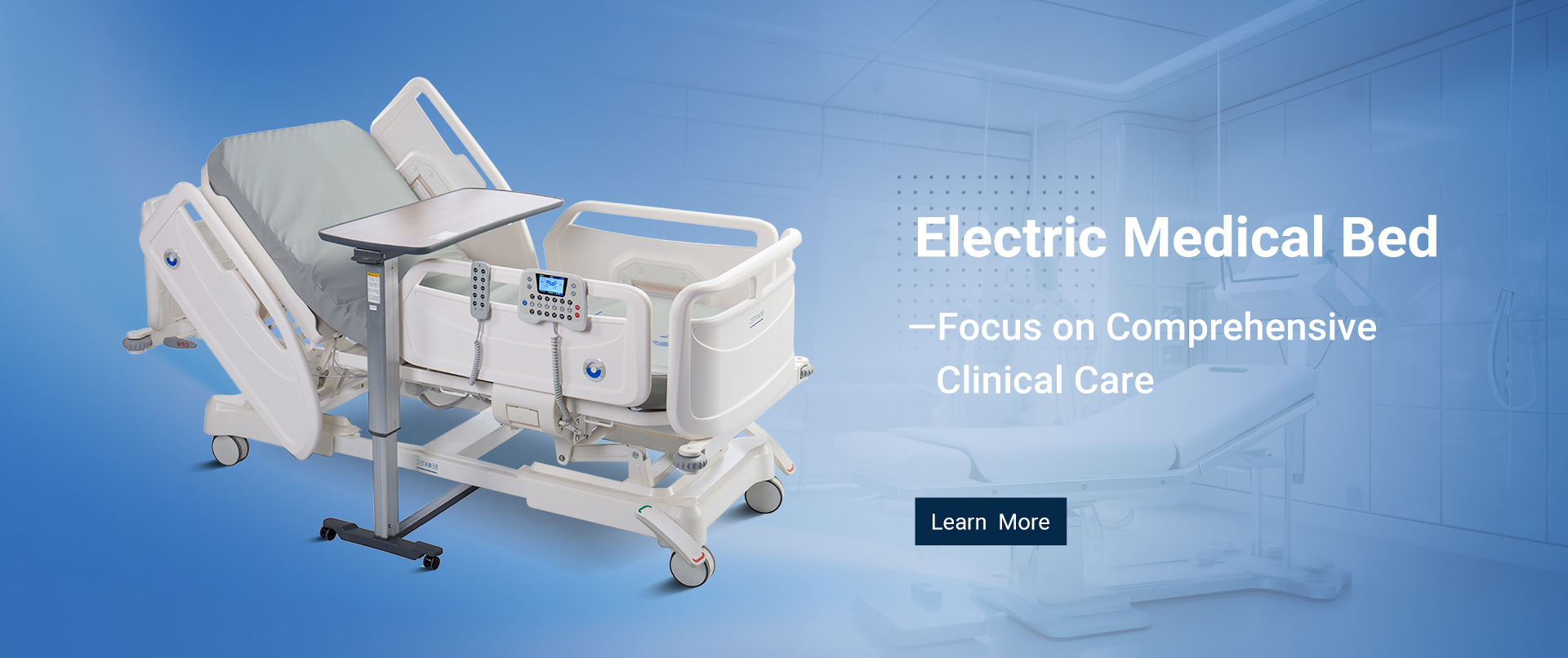
Choosing the right hospital bed starts with the care setting, not the lowest quotation. OECD Health at a Glance 2023 shows hospital-bed supply ranging from fewer than 2 to more than 12 beds per 1,000 people across OECD countries. This difference affects room size, staffing, maintenance, and delivery planning. For general wards, manual or semi-electric beds can control costs. Fully electric beds suit facilities needing frequent height, backrest, and knee-position adjustments. ICU beds require integrated weighing, emergency positioning, and strong infection-control design. Bariatric beds need wider platforms and higher safe working loads.

Check the essential features carefully. Adjustable height supports safer transfers and may reduce caregiver strain. Split side rails, lockable casters, and clear angle indicators improve daily operation. A low-height function can help reduce fall consequences, while a reliable battery supports movement during power interruptions. The World Health Organization’s Global Patient Safety Action Plan 2021–2030 identifies falls and pressure injuries as important preventable harms. Therefore, assess mattress compatibility, pressure-relief support, and cleaning access together, not separately.

Ask for test reports, load testing, electrical safety documentation, and service-part availability. Standards matter. So does local repair capacity. ISO 13485 certification can indicate a controlled medical-device quality system, but it does not guarantee suitable performance in every ward. Request samples when possible. Observe noise, brake response, cable routing, and cleaning time. No checklist is perfect. A bed that looks advanced may become a costly problem if staff dislike its controls or spare parts arrive slowly.

Check Safety Standards, Certifications, and Regulatory Compliance

Choosing a hospital bed for global sourcing requires more than comparing height ranges and prices. Safety evidence should guide the decision. The WHO Patient Safety Fact Sheet (2023) reports that one in ten patients experiences harm during healthcare. More than half of this harm is preventable. Bed design can reduce avoidable risks, including patient falls, rail entrapment, unstable movement, and electrical faults.

Ask suppliers for test reports against IEC 60601-2-52, which addresses the safety and essential performance of medical beds. Request evidence of ISO 13485-based quality management and ISO 14971 risk-management processes. These documents do not replace market approval. They show how risks were identified and controlled. Confirm electrical safety, maximum patient load, castor braking, mattress compatibility, and rail-gap measurements. Use an accredited laboratory whenever possible. A certificate alone is weak evidence. Check its scope, issue date, model number, and testing laboratory. That detail matters.

Regulatory requirements differ across countries. Confirm the destination market’s registration, labeling, language, and post-market reporting duties before purchasing. The WHO Global Patient Safety Report 2024 emphasizes stronger safety governance and learning systems across healthcare. Sourcing teams should therefore examine complaint records, corrective-action procedures, and spare-parts support. I have seen procurement decisions focus too heavily on unit price. That approach can miss maintenance delays and patient-safety costs. Some evidence may still be incomplete. Record those gaps, request clarification, and avoid treating a polished sales file as proof of compliance.

How to Choose the Right Hospital Bed for Global Sourcing?

Key safety standards, quality-system requirements, and regulatory milestones to verify before purchasing.

The timeline shows the publication or application year of major references commonly used when evaluating hospital beds for international sourcing. Confirm the target market’s current adoption, product classification, electrical safety testing, bed-system safety testing, manufacturer quality system, technical documentation, and registration requirements before placing an order.

References: IEC 60601-2-52:2009 and Amendment 1:2015; ISO 13485:2016; Regulation (EU) 2017/745, applicable from 26 May 2021; FDA Quality Management System Regulation, effective 2 February 2026.

Evaluate Materials, Durability, and Infection Control Design

Choosing a hospital bed for global sourcing requires more than comparing prices and product photos. Materials influence cleaning speed, patient safety, and service life. Powder-coated steel offers strength, but damaged coating can expose metal to corrosion. Stainless steel resists moisture better, though it may increase weight and cost. ABS or high-density plastic panels are easier to wipe, but brittle parts can crack under impact.

Inspect every surface closely. Smooth welds, sealed joints, and removable mattress platforms reduce hidden soil and fluid buildup. Avoid deep grooves around side rails and control panels. These areas often collect residue during routine cleaning. Confirm that upholstery, plastics, and coatings tolerate the disinfectants used in the destination hospital. Antimicrobial claims should not replace proven cleaning procedures. They need independent test evidence.

Durability testing should reflect real ward conditions. Check safe working load, caster performance, repeated backrest movement, and side-rail impact resistance. Ask for test records, inspection methods, and replacement-part availability. A sample bed should be examined after transport, assembly, and several cleaning cycles. I have seen attractive frames develop loose fittings quickly. The problem was not the material alone. It was weak hardware and poor maintenance access. Global buyers should also verify electrical safety documentation and destination-market requirements. No design is perfect. A stronger frame may be harder to move, while a lighter bed may need more frequent repairs. That trade-off deserves careful review.

How to Choose the Right Hospital Bed for Global Sourcing? – Evaluate Materials, Durability, and Infection Control Design
Evaluation Area Key Specification or Design Feature Typical Practical Range or Requirement Why It Matters in Global Sourcing Recommended Verification Method
Bed Configuration Intended care environment General ward, long-term care, home care, emergency, or intensive care The required load capacity, positioning functions, electrical protection, side-rail design, and cleaning performance depend on the care environment. Match the product classification and intended use with the target country’s hospital procurement requirements.
Platform Size Mattress platform width and length Common adult sizes are approximately 900–1,050 mm wide and 2,000–2,200 mm long; bariatric beds are wider. Platform dimensions must suit locally available mattresses, bed linen, room clearances, elevators, and transport routes. Check dimensional drawings, mattress compatibility, turning radius, doorway clearance, and packaging dimensions.
Patient Load Safe working load and patient weight capacity Many adult medical beds specify approximately 170–250 kg safe working load; bariatric models may exceed this range. A higher capacity improves suitability for diverse patient populations but may increase frame weight, shipping volume, and actuator requirements. Request the tested safe working load, maximum patient weight, test method, and overload protection documentation.
Frame Material Main frame and support structure Powder-coated carbon steel is common; stainless steel or corrosion-resistant coated steel is preferred for demanding cleaning environments. Material selection affects structural strength, corrosion resistance, total cost, and service life. Review material certificates, coating specifications, weld quality, corrosion testing, and visible surface defects.
Surface Finish Paint or protective coating Smooth, continuous, chip-resistant powder coating with sealed edges and minimal exposed crevices. Damaged or porous finishes can retain soil and moisture, accelerate corrosion, and make disinfection less reliable. Inspect coating adhesion, edge coverage, chemical-resistance test results, and repair procedures for scratches.
Deck Panels Mattress support panels Removable polymer panels, coated steel panels, or aluminum panels; panels should support the specified patient load without excessive deflection. Removable panels simplify cleaning and maintenance, while smooth non-absorbent surfaces reduce contamination points. Confirm panel removal without special tools, load testing, anti-slip performance, and replacement availability.
Positioning Backrest, knee-break, height, and trendelenburg functions Electric beds commonly provide adjustable backrest and knee-break positions; height adjustment is often approximately 400–800 mm, depending on design. Adjustability supports patient care, transfer safety, caregiver ergonomics, and clinical workflow. Verify movement ranges, cycle testing, emergency lowering, pinch-point protection, and operation under rated load.
Electrical Safety Medical electrical system and ingress protection Products should be evaluated against the applicable medical electrical safety requirements, including IEC 60601-2-52 where applicable. IP ratings depend on the design and intended environment. Electrical safety, fluid protection, grounding, and electromagnetic compatibility are critical for international deployment. Request third-party test reports, leakage-current results, EMC results, IP test evidence, and country-specific plug or voltage options.
Actuators Motor, actuator, and control-system durability Actuators should be rated for the bed’s safe working load and repeated adjustment cycles; thermal protection and manual emergency release are desirable. Actuator failure can disable essential positioning functions and increase maintenance cost in remote markets. Review cycle-test data, duty cycle, noise level, overload protection, spare-part lead time, and field-replacement instructions.
Side Rails Full-length or split side rails with secure locking Rails should reduce unintended patient egress while avoiding hazardous gaps; gap dimensions must be checked against the applicable safety standard. Poorly designed rails may create entrapment, fall, or pinch hazards and can increase regulatory risk. Inspect locking force, release controls, gap measurements, impact resistance, and entrapment-risk test documentation.
Castors and Mobility Wheel diameter, braking, and directional control Medical beds commonly use 125–150 mm castors; larger castors may improve movement over thresholds and uneven floors. Reliable mobility reduces staff effort and supports safe transfers, especially on older hospital flooring. Test rolling resistance, straight-line tracking, individual and central braking, swivel-lock function, and threshold crossing.
Infection Control Cleanability and disinfection compatibility Use non-porous, smooth, wipe-clean surfaces with sealed joints, protected wiring, rounded corners, and limited exposed fasteners. Fewer seams and hidden contamination points improve environmental cleaning consistency and reduce downtime between patients. Obtain a validated cleaning and disinfection instruction listing compatible agents, concentrations, contact times, and restrictions.
Infection Control Resistance to hospital cleaning chemicals Materials should be tested against the disinfectants used in the destination market, such as alcohol-based products, chlorine solutions, quaternary ammonium compounds, or hydrogen-peroxide products. Repeated exposure can cause cracking, discoloration, corrosion, or loss of coating adhesion if chemical compatibility is not confirmed. Compare the supplier’s chemical-resistance data with the hospital’s actual disinfectant list; do not rely only on the term “antibacterial.”
Mattress Interface Mattress retention, compatibility, and moisture management Mattress dimensions must match the platform; gaps should be minimized, and the mattress cover should be fluid-resistant, welded or sealed, and cleanable. Incorrect mattress fit can increase fall and entrapment risks and create spaces where fluids and debris accumulate. Check mattress dimensions, cover seam construction, cleaning instructions, replacement availability, and compatibility with side rails.
Patient Safety Brake, alarm, pinch-point, and entrapment controls Essential controls should be clearly identified and accessible; moving parts should be guarded or designed to minimize pinch and shear hazards. Safety features influence clinical acceptance, liability exposure, and compliance with hospital risk-management procedures. Conduct functional trials with a loaded bed and review risk-management documentation, including an ISO 14971-based process where applicable.
Durability Frame, rail, castor, and adjustment-cycle testing Durability claims should be supported by documented repeated-use testing under the stated safe working load. Cycle testing provides more useful evidence than appearance alone and helps predict maintenance requirements over the product life. Request test conditions, number of cycles, load configuration, failure criteria, repair history, and sample inspection records.
Maintenance Serviceability and spare parts Common replacement items should include castors, actuators, hand controls, side-rail components, cables, and battery parts where fitted. Local access to spare parts reduces downtime, total ownership cost, and dependence on urgent international shipments. Confirm parts list, warranty terms, expected service life, technical manuals, training, and regional service arrangements.
Sustainability Repairability, recyclability, and packaging Prefer modular assemblies, replaceable components, recyclable metal content, and packaging that protects the bed without unnecessary volume. Modular products can reduce disposal cost, freight emissions, and the need to replace an entire bed after a component failure. Request a bill of materials, packaging dimensions, recycled-content information, disassembly instructions, and end-of-life guidance.
Compliance Technical file and market-entry documentation Typical documentation may include risk management, electrical safety, EMC, usability, biocompatibility for relevant patient-contact materials, cleaning validation, and labeling. Documentation gaps can delay customs clearance, registration, hospital approval, or tender qualification. Use a country-by-country compliance checklist and verify that reports identify the exact model, configuration, and tested accessories.
Sourcing Decision Overall selection priority Recommended approach: safety and infection control first A low purchase price should not outweigh structural reliability, cleanability, regulatory readiness, service support, and lifecycle cost. Score each shortlisted model using weighted criteria: safety, infection control, durability, compliance, maintenance, logistics, and total cost of ownership.
Data note: Numerical ranges are representative procurement benchmarks for adult hospital beds, not universal requirements. Final specifications should be confirmed against the destination country’s regulations, hospital cleaning protocols, applicable standards, mattress system, room dimensions, and supplier test documentation. Relevant standards may include IEC 60601-2-52 for medical beds and ISO 14971 for medical-device risk management, where applicable.

Assess Suppliers, Manufacturing Capacity, and Quality Systems

How to Choose the Right Hospital Bed for Global Sourcing?

Assess Suppliers, Manufacturing Capacity, and Quality Systems

A reliable supplier should provide more than attractive pricing. Request company registration details, export references, technical files, and recent quality certificates. Verify whether the certificates cover the actual hospital bed models. A document alone proves little. Speak with previous buyers when possible. Ask how the supplier handles complaints, replacement parts, and field failures.

Manufacturing capacity deserves close inspection. Review the factory layout, assembly lines, warehouse space, and testing equipment. Confirm monthly output using production records, not sales promises. Check whether critical components have approved backup suppliers. A crowded workshop may signal strong demand, but it can also reveal weak scheduling. Ask for a sample production plan during your expected buying season. Capacity is not only machine count. Skilled workers matter.

Quality systems should be visible in daily work. Look for incoming inspection records, torque checks, electrical safety tests, and final-load testing. Each bed should carry a traceable serial number. Inspect how staff isolate nonconforming parts. During one factory assessment, a clean showroom contrasted with incomplete inspection logs. That gap changed the sourcing decision. A supplier can improve, but improvement needs evidence, owners, and dates. Request a corrective-action report after sample testing. Do not ignore small issues, such as loose fasteners or unclear labels. They may indicate deeper process weaknesses. Build an audit scorecard, yet leave room for professional judgment. Numbers help. They never replace careful observation.

Review Pricing, Logistics, Warranty, and After-Sales Support

Hospital bed sourcing should begin with landed cost, not the factory quote. A 2024 hospital beds market report by Fortune Business Insights estimates steady global growth through 2032. That growth attracts new suppliers, but price comparisons remain difficult. Request a full cost sheet covering mattress platform, side rails, freight, insurance, customs, installation, and spare parts. One low quote can hide expensive after-sales work.

Logistics deserves equal attention. The World Bank’s 2023 Logistics Performance Index assessed 139 economies across customs, infrastructure, shipment reliability, and delivery speed. Use those factors when selecting a shipping route and local partner. Confirm packaging dimensions, container loading plans, battery transport rules, and delivery access for narrow hospital corridors. Ask for a pilot shipment. It may expose damage risks before a large order does.

Warranty language must be measurable. Specify coverage periods, response times, replacement-part availability, and technician training. A two-year warranty means little without service records and escalation contacts. ISO 13485-based quality systems can support traceability, but certification alone does not guarantee reliable field support. Review failure data from similar installations. Ask how quickly common parts can arrive. WHO’s medical-device guidance repeatedly emphasizes maintenance, user training, and lifecycle planning. Do not ignore these costs. I have seen buyers focus too heavily on unit price. That approach is understandable, but incomplete. A practical contract should include acceptance testing, preventive-maintenance schedules, remote troubleshooting, and clear responsibility for transit damage. Some assumptions will still be wrong. Build room for review.

Functional and Stylish Bedside Tables for Modern Hospital Rooms

Modern hospital rooms benefit from bedside tables that combine practical function with a calm, contemporary appearance. A thoughtfully designed table provides patients with convenient access to personal belongings, reading materials, water, and essential care items without making the room feel crowded. Clean lines, balanced proportions, and a pleasant finish help create a more welcoming environment for patients, visitors, and healthcare staff.

Lightweight construction makes the table easy for staff to reposition when cleaning, reorganizing the room, or assisting patients, while its sturdy structure supports dependable daily use. A stable base and durable surface help it remain secure beside the bed, even in busy clinical settings. Smooth, easy-to-clean materials also support efficient room maintenance, and carefully planned storage can keep frequently used items organized and within reach. With its combination of visual appeal, mobility, and reliable performance, the bedside table fits naturally into modern hospital interiors where comfort and practical care work together.

FAQS

How should a facility choose the right hospital bed type?

Start with the care setting, patient needs, room size, staffing, and maintenance capacity. Manual beds may suit general wards with limited adjustment needs. Fully electric beds help when staff adjust height and positioning often. ICU beds need emergency positioning, weighing functions, and strong cleaning access. Bariatric beds require wider platforms and higher safe working loads.

Which bed features support safer daily care?

Adjustable height can make transfers safer and reduce caregiver strain. Lockable casters help prevent unwanted movement. Split side rails can support repositioning and reduce some fall risks. Clear angle indicators improve routine adjustments. Small details matter.

Why are mattress compatibility and pressure relief important?

The mattress and bed should work as one system. Check dimensions, support settings, cleaning access, and pressure-relief functions together. Poor compatibility may create gaps or reduce support. Pressure injuries are preventable in many cases, but prevention requires daily attention.

What safety documents should buyers request?

Request medical-bed safety test reports, load-testing results, and electrical safety records. Also request evidence of quality management and risk-control procedures. Check the tested model number, report date, laboratory, and certificate scope. A certificate alone is weak evidence. Verify the details.

What regulatory checks are needed before international purchasing?

Confirm destination-market registration, labeling, language, and post-market reporting requirements. Ask whether the supplier can provide complete technical documentation. Requirements differ between countries. Do not assume one approval works everywhere. That assumption can become expensive.

How can buyers assess a supplier’s real manufacturing capacity?

Review assembly areas, warehouse space, testing equipment, and production records. Compare promised monthly output with actual records. Ask for a production plan covering your expected buying season. Confirm backup sources for critical components. Machines are not enough. Skilled workers matter too.

What should buyers inspect during a factory audit?

Look for incoming inspections, torque checks, electrical tests, and final-load testing. Each bed should have a traceable serial number. Check how workers isolate defective parts. Inspect loose fasteners, unclear labels, cable routing, brake response, and operating noise. A clean showroom proves little.

How should a buyer evaluate after-sales support?

Ask about complaint handling, replacement parts, field failures, and repair response times. Confirm local service capacity and spare-part availability. Request corrective-action reports after sample testing. A bed may look advanced but become costly when parts arrive slowly. Some evidence may remain incomplete. Record the gaps.

Conclusion

Choosing the right Hospital Bed for global sourcing begins with clearly defining patient care requirements, intended use, and the clinical environment. Buyers should compare manual, semi-electric, and fully electric models while evaluating essential features such as adjustable positioning, safe side rails, braking systems, patient weight capacity, and emergency functions. Safety standards, certifications, and regulatory compliance should be verified for the target markets before placing an order.

Material quality, structural durability, cleanable surfaces, and infection-control design are also important for long-term performance and safe daily use. Buyers should assess each supplier’s manufacturing capacity, quality management systems, inspection procedures, and ability to maintain consistent production. Finally, a complete sourcing decision should consider total pricing, packaging, shipping arrangements, delivery timelines, warranty coverage, spare parts availability, and after-sales technical support. A balanced evaluation of clinical needs, product reliability, compliance, and supplier service can help organizations select suitable hospital beds with lower procurement risks.

Liam

Liam

Liam is a dedicated marketing professional at Bewatec (Zhejiang) Medical Device Co., Ltd., where he leverages his extensive knowledge of innovative medical solutions to drive the company's vision of a digital transformation in healthcare. With a keen focus on smart medical care, Liam plays a......
Previous How to Find Reliable Health Equipment Suppliers?